MORE INFORMATION
-I pick up La Paz
-Condoriri Park arrival
-Charcota Lagoon Hike
-Ascent to the summit (5350m.a.s.l.)
-return La Paz
RECOMMENDATIONS!
- Warm clothing
- Sunglasses
- Sunscreen
- Gloves and hat
- Chocolates, nuts and coca sweets
- Pills (Sorojchipills)
- Hiking shoes
Tour Includes
- ✓Round trip transportation
- ✓Guide (English and Spanish)
- ✓Lunch (Vegetarian Option)
Tour Does Not Include
- ✗Entry Ticket Bs. 20
- ✗Ecological walking sticks Bs. 30
- ✗Water
(Coming soon)
👑 Private Tour - Exclusive Benefits
Choose the time that suits you best
More comfortable and without sharing with strangers
100% dedicated attention to you
No rush, for the photos you want
Ideal for families, couples or friends
Contact us for a personalized quote
Pico Austria
WALK, HEAL YOUR SOUL ON THE ANDEAN ROADS
There are summits that require years of training and high mountain equipment. And there are summits that open the door to mortals. Pico Austria is one of the latter. At 5,327 meters high (518 meters higher than Mont Blanc, the roof of Europe), this colossus of the Cordillera Real is every beginner's dream: technically easy, visually overwhelming and located just 40 kilometers from La Paz. They owe their name to a group of Austrian mountaineers who explored these routes at the beginning of the 20th century and named the peak in honor of their country.
Acclimatization is everything. Pico Austria is the perfect destination to prepare before attempting higher peaks like Huayna Potosí. The hike begins at the Chiar Khota lagoon (4,670 m) and ascends 700 meters to the top in a route of approximately 11 kilometers round trip. The trail is marked and presents no technical difficulties, but the height is the real enemy: oxygen is scarce, your heart races just by walking and the last 300 meters feel like an eternity while your lungs ask for a breath that doesn't come. On the way down, his knees shake and his legs look like jelly, but the smile doesn't leave his face.
The climate is dry, cold and changeable. The best time to climb is between May and September (dry season), when the skies are clear and the chances of snow or rain are minimal. From December to March, persistent rain and snowfall turn the route into a mud hell. Temperatures at the summit hover around -5°C to -10°C during the day, and at night they plummet to -15°C or lower. The high altitude sun burns even though it is cold, and the wind that comes down from the glaciers cuts the face like a blade. You will begin the hike with a scarf and gloves, and an hour later you will be in your shirt sleeves sweating, and then warm up again when you reach the top. All in the same day. Everything in the same pocket.
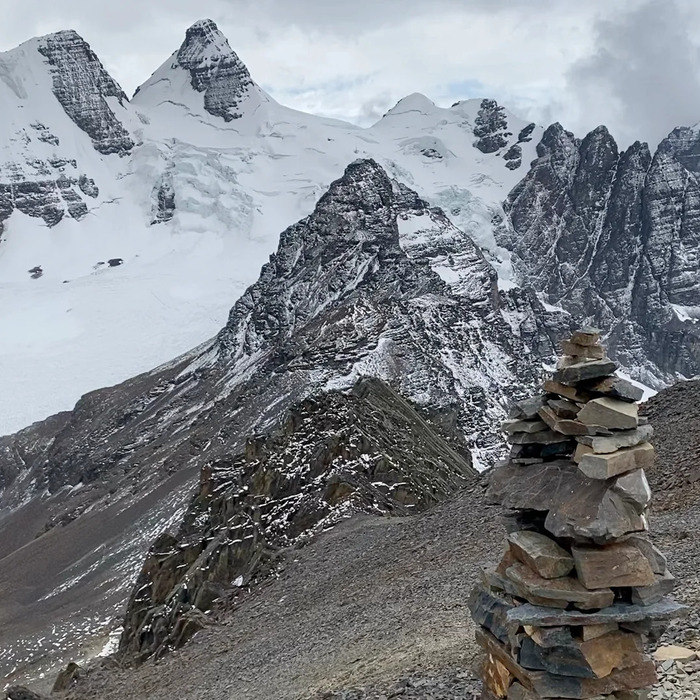
Aymara legend considers these peaks as the home of spirits. Before ascending, local communities make ritual offerings to Pachamama (Mother Earth) to ask for permission and protection. You will notice small mounds of stones (apachetas) along the way, where locals leave coca leaves or bottles of alcohol as tribute. Don't touch them. Do not destroy them. The mountain remembers everything. The elderly say that whoever climbs a mountain without asking permission, the mountain takes its toll: vertigo, extreme exhaustion or simply a bad day where nothing goes well. For this reason, the most respectful guides always carry coca leaves in their bags, not to chew them, but to offer them at the summit.
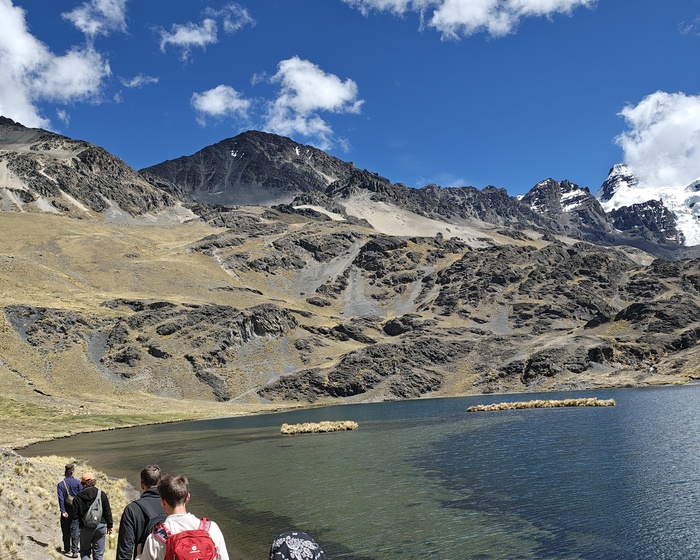
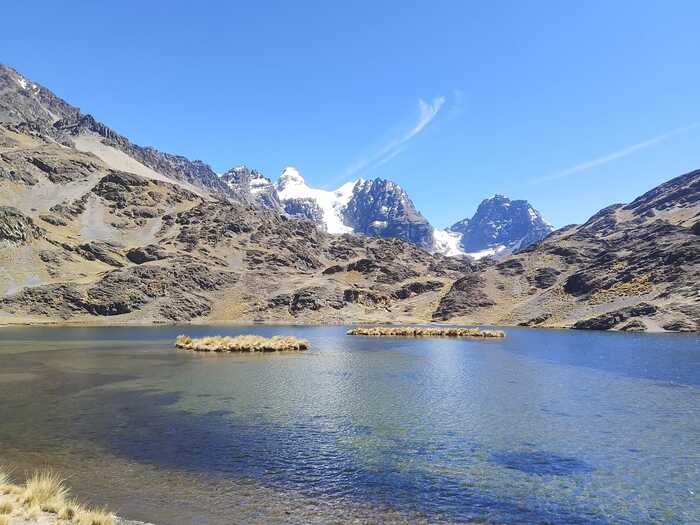
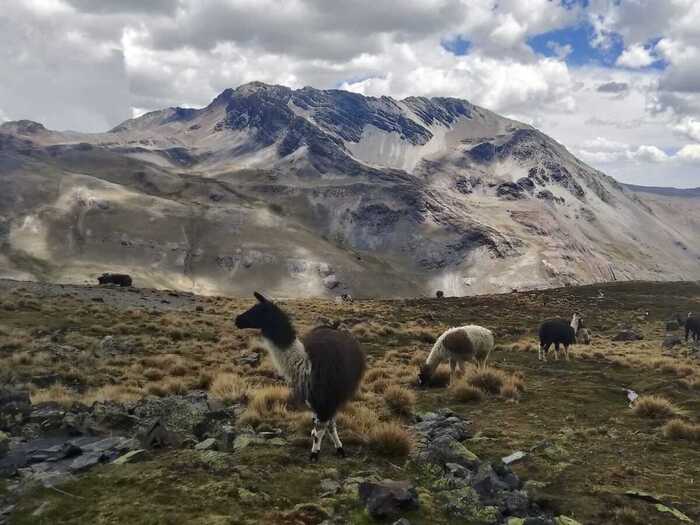
The silence of the Chiar Khota lagoon is the first thing that greets the visitor. Before beginning the ascent, you will come across this deep blue water mirror, surrounded by purple and gray mountains. The water is frozen (it never exceeds 5°C), and in winter it freezes, forming a white crust that crunches under the feet of the Andean ducks that inhabit it. The legend of this lagoon says that at its bottom rests a submerged city, punished by the gods for its pride. Local fishermen avoid sailing it at night because they claim to have heard church bells ringing underwater. If you pay attention, maybe you'll hear them too.
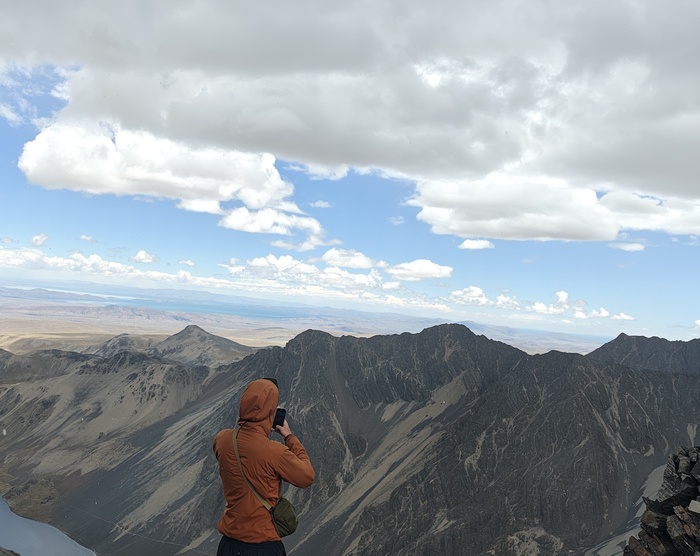
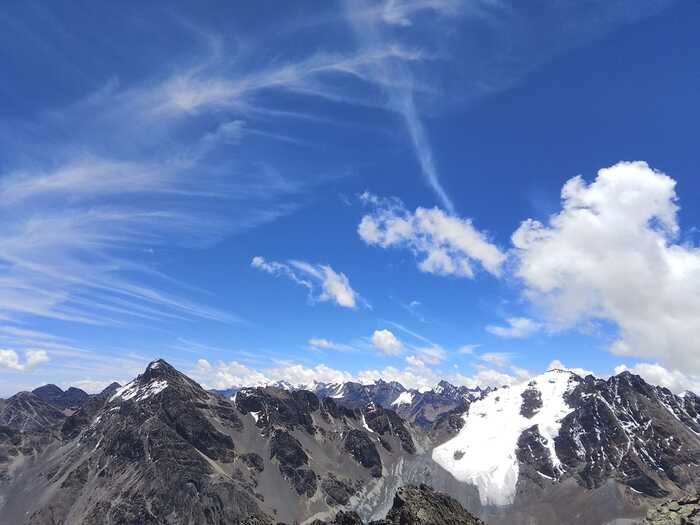
The most striking thing is the view from the summit. Up there, at the top of this rounded peak of dark slate, the world opens up like a 3D map. To the north, Lake Titicaca shines like a 230-kilometer-long silver mirror. To the east, Huayna Potosí (6,088 m) stands defiantly, its eternal snow reflecting the sun. To the west, the Nevado Condoriri (5,648 m) – whose profile resembles a condor with its wings spread – dominates the horizon. And on the clearest days, when the atmosphere allows it, Sajama (6,542 m), the highest volcano in Bolivia, can be seen more than 200 kilometers away. Your eyes won't be able to take in everything, but your memory will try to save every detail. ?
And then there are the condors. If Pachamama deems it worthy, during the ascent or at the top, huge Andean condors—with a wingspan of up to 3 meters—will hover over you without moving a single feather. The Aymaras believe that they are the spirits of the ancient wise men who watch over the mountains. Seeing them fly at the same height as you, just a few meters away, with their bald heads and white rings on their necks, is a sight that gives goosebumps. The condor does not flap its wings, it only glides, taking advantage of the thermal currents that rise from the valley. You can spend an entire hour walking around without getting tired. You, on the other hand, will be still at the summit, breathless, without cold, with nothing more than that image burning into your retina.
The descent is another adventure. Going down Austria Peak is faster but not easier. The loose gravel makes your boots skid, and the steep slope punishes your knees. Many hikers fall sitting down on the slipperiest sections, getting up with nervous laughter and bruises. But down there, on the shore of the Chiar Khota lagoon, a thermos of hot coca tea is waiting for them. The first sip, with your hands still shaking from the effort and the cold, is possibly the best drink you have ever had in your life. And as the afternoon sun begins to turn the peaks orange and pink, you'll look up at that peak you stepped onto just a few hours ago and think, "Was I really there?" Yes. It was. And no one can take that thought away.