MORE INFORMATION
The tour starts at 08:30 AM and ends on the third day at 1:00 PM to 3:00 PM
FIRST DAY
- Pick up from La Paz
- Arrival at the workshop (Collection of equipment)
- Arrival at base camp (payment of 50 bs)
- Lunch
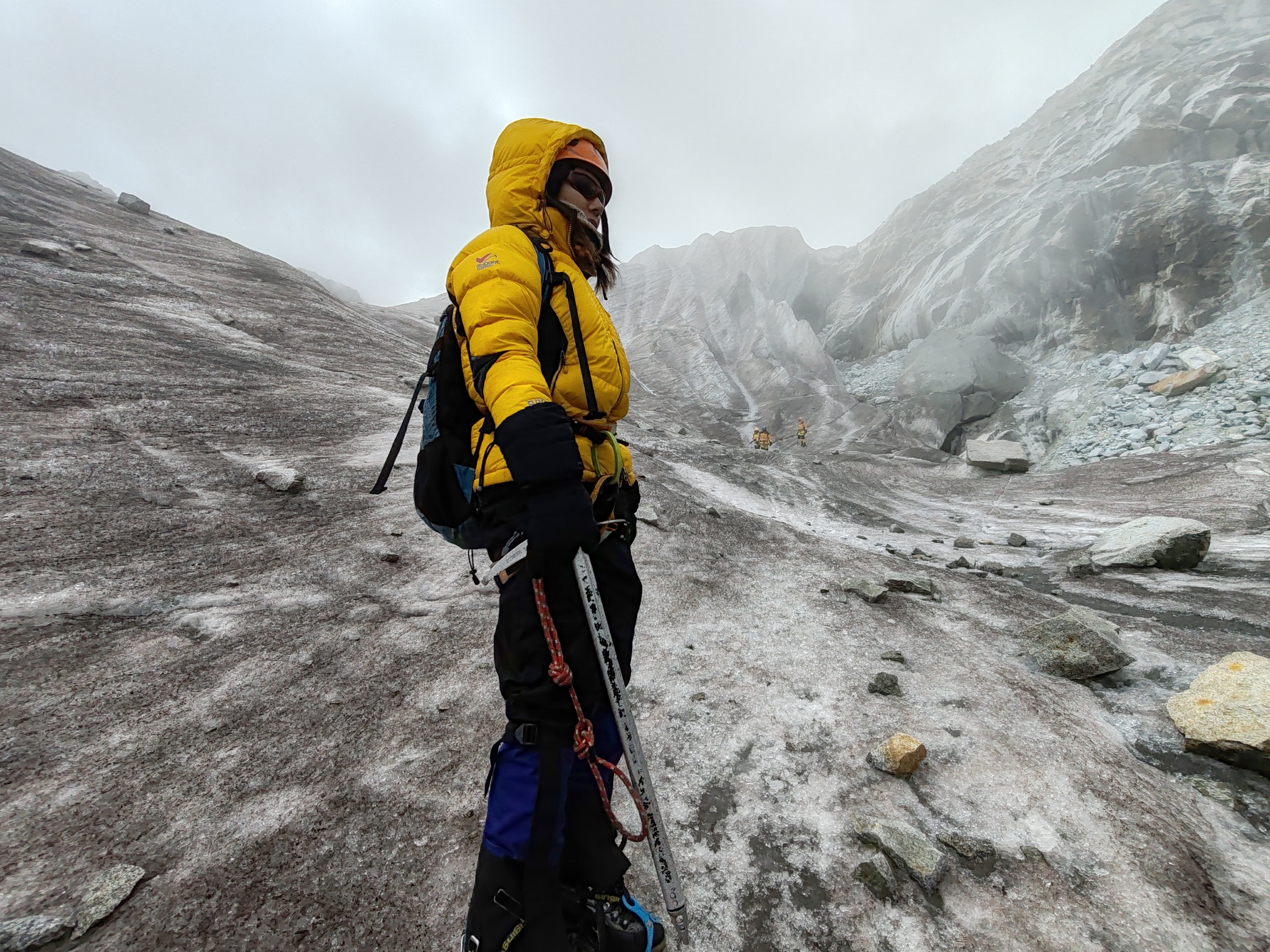
- Old Glacier (Practice with the team)
- Return to base camp
- Dinner
- Rest
SECOND DAY:
- Breakfast
- Free Rest
- Lunch
- High camp ascent
- Dinner
- Rest
THIRD DAY:
- Breakfast
- Ascent to the summit
- Summit (6088m.a.s.l.)
- Photographs
- High camp descent
- Hot soup and hot drinks
- Descent to base camp
- Return to La Paz
TEAM:
- Thermal jacket
- Thermal pants
- Gloves and helmet
- Boots
- Harness
- Ice ax
- Crampons
RECOMMENDATIONS!
- Warm clothing
- Sleeping bag
- Sunglasses
- Blocker
- Personal hygiene bag
- Chocolates, nuts, coca sweets and honey sweets
- Water
- Pills for altitude sickness (Punacap)
Tour Includes
- ✓Round trip transportation
- ✓Specialized guide in Spanish
- ✓climbing equipment
- ✓2 Breakfasts
- ✓2 Lunches and 1 soup
- ✓2 Dinners
Tour Does Not Include
- ✗Backpack from 50 to 70 liters (Bs. 50)
- ✗Headlamp
- ✗Sleeping bag
- ✗Entrance ticket to the mountain (Bs. 50)
(Coming soon)
👑 Private Tour - Exclusive Benefits
Choose the time that suits you best
More comfortable and without sharing with strangers
100% dedicated attention to you
No rush, for the photos you want
Ideal for families, couples or friends
Contact us for a personalized quote
Huayna Potosi TOUR DE 3 DÍAS Y 2 NOCHES
Just 25 kilometers from La Paz, almost touching the sky with its 6,088 meters above sea level, rises the Huayna Potosí, the youngest and most accessible of the giants of the Cordillera Real. Its name in Aymara means "young hill", and it is no coincidence: while its brothers Illimani and Mururata are venerable mountains, Huayna has the silhouette of a snow diamond that never ages. It is the most popular mountain in Bolivia, the dream of every beginner mountaineer who wants to summit a six thousand without needing years of experience. ?️
The legend of the young giant is the most beautiful and tragic of the Andes of La Paz. In ancient times, when the stars came down to drink from Lake Titicaca, three giants protected the plateau: Illimani, Mururata and the young Huayna Potosí. They were guardians of stone and wind, and the two elders taught the young man how to use the sling. But envy triggered a battle between Illimani and Mururata; The earth shook, and the end was tragic: Illimani defeated Mururata and cut off his head. Viracocha, the creator god, intervened to punish the giants: he left Mururata truncated, Illimani was covered with eternal snow, and he granted the young Huayna, who had cried for his brothers, the gift of eternal youth. That's why its white silhouette looks like a snow diamond that never ages. Another legend says that Thunupa, the god of balance, took his divine sling and threw a piece of gold that decapitated a rebellious giant; The head flew to the west and became the Sajama, and the severed body is the Mururata, while the young Huayna Potosí watched, unharmed and eternal.
The weather here is a more formidable adversary than the road. The best time to climb is between May and September, when the skies are clear and the chances of snow or rain are minimal. From December to March, persistent rain and snowfall turn the route into a hell of snow and the risk of avalanches. At the summit, temperatures are around -5°C to -10°C, but the wind coming down from the glaciers makes the thermal sensation even more brutal. UV radiation is extreme (level 11+), and the air has 40% less oxygen than at sea level. Each step is a negotiation with the lungs, each breath a victory over vertigo.
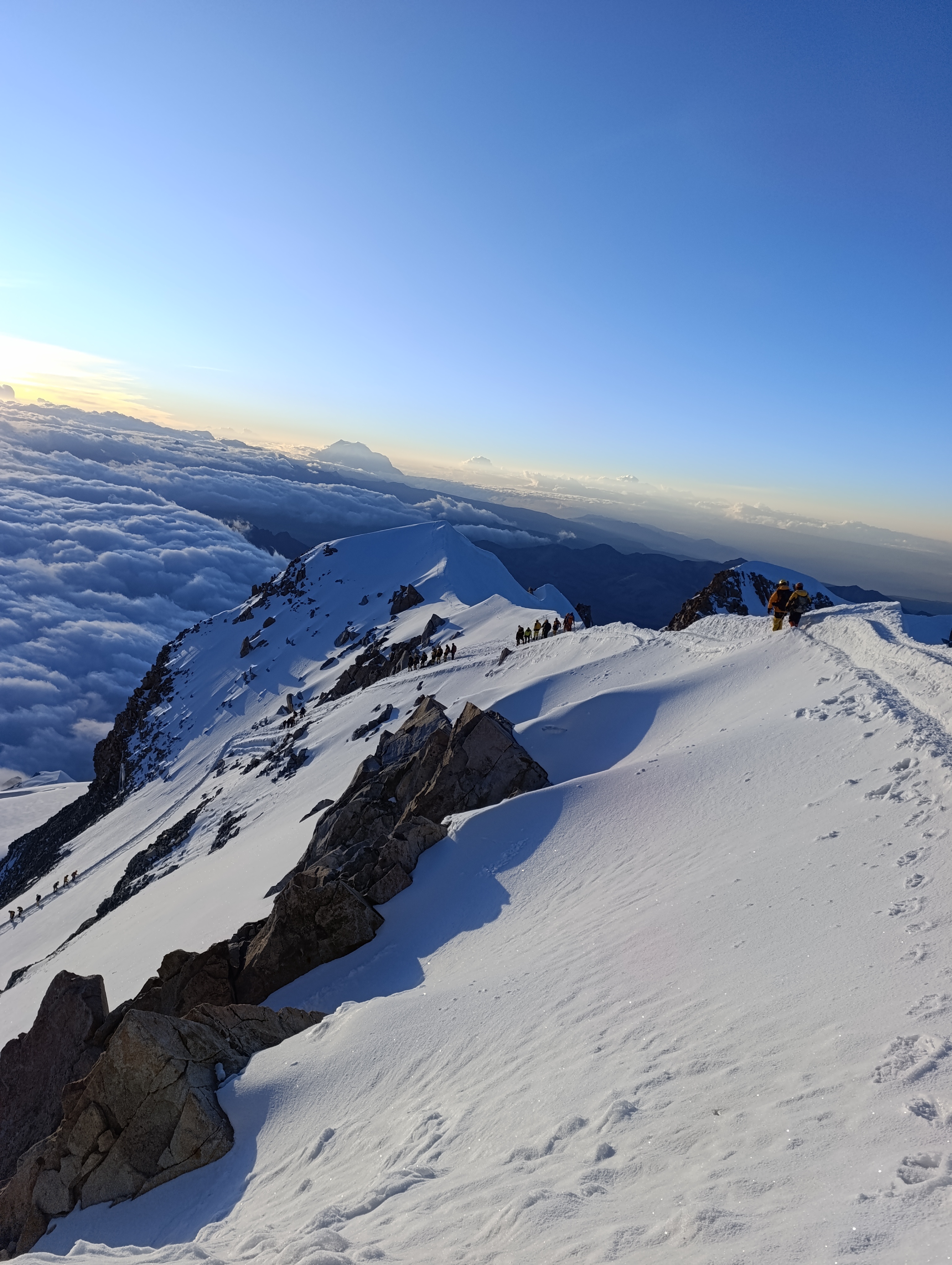
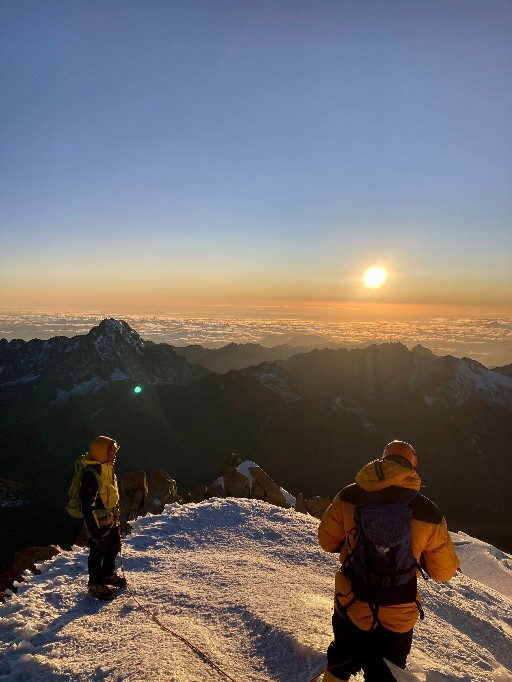
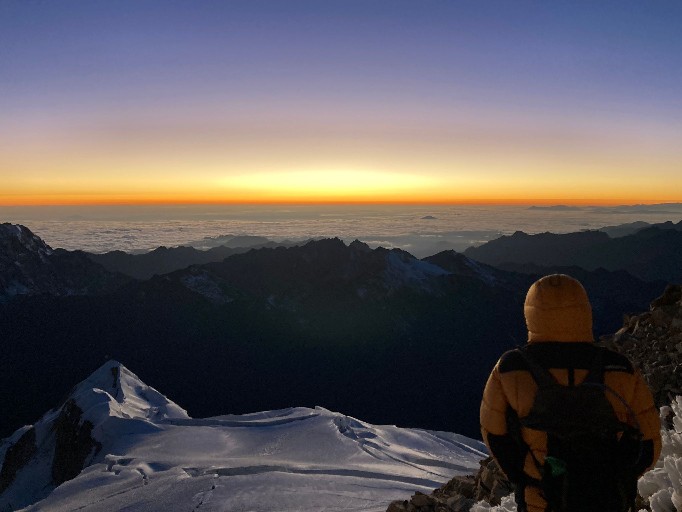
The most striking thing about Huayna Potosí is not the summit: it is the sunrise. The ascents begin between midnight and 2:00 in the morning, with the headlights lit like fireflies in the dark. For hours, all you can hear is the crunch of crampons on the ice, the whistling of the wind and labored breathing. But when the sun begins to rise behind the Cordillera Real, magic happens. From 6,088 meters, you see how the golden light bathes first the Illimani (6,462 m), then the Mururata, then the Amazon jungle that extends to the east like an infinite green sea. Lake Titicaca shines in the background like a 230-kilometer silver mirror. And below, the city of La Paz and El Alto wake up like a panel of lights that turn on one by one. The feeling of standing at the highest point in Bolivia, with the sun rising at your feet and the clouds at your height, is indescribable. It's like floating between two worlds: heaven and earth, ice and fire, silence and eternity.
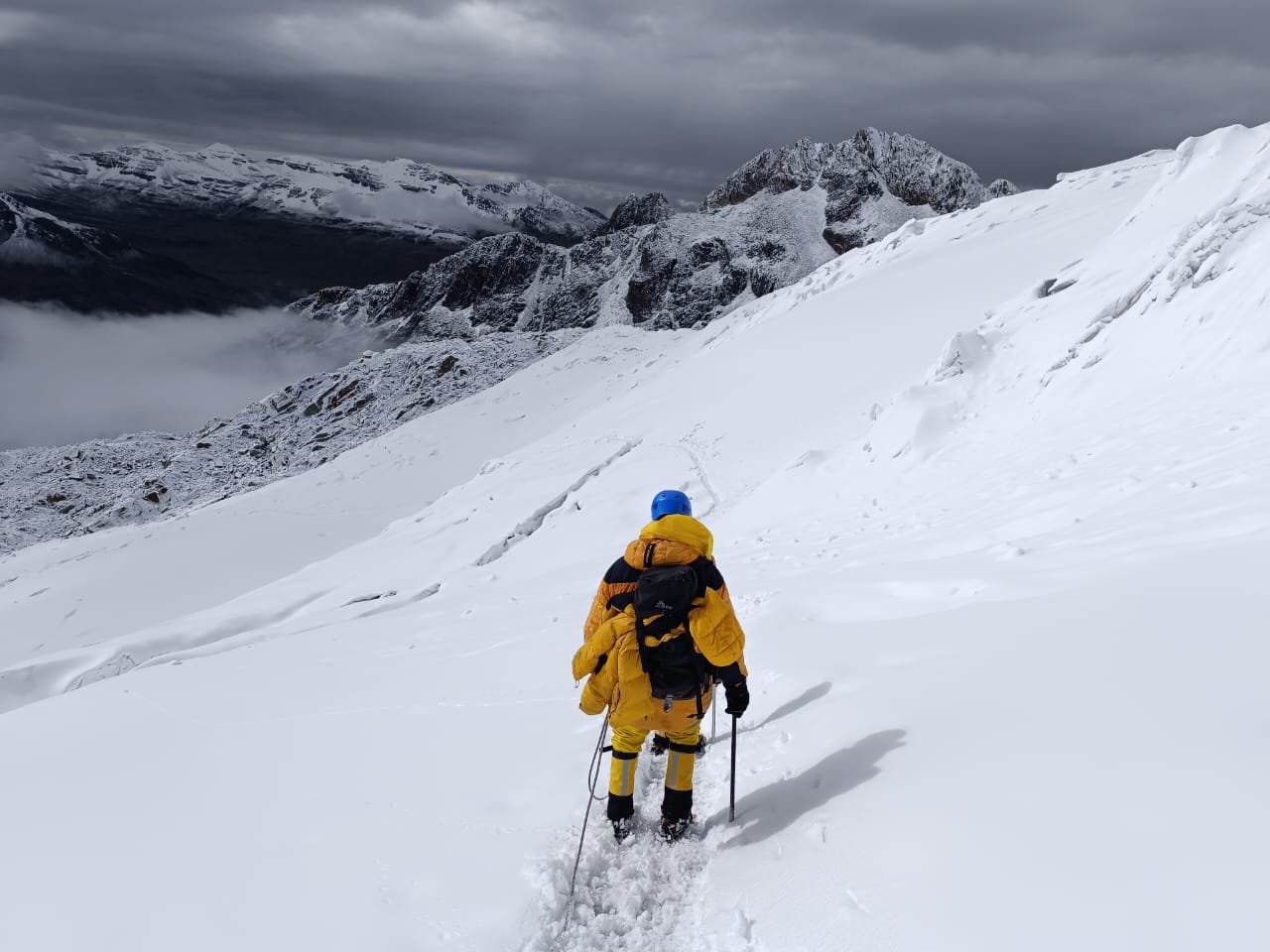
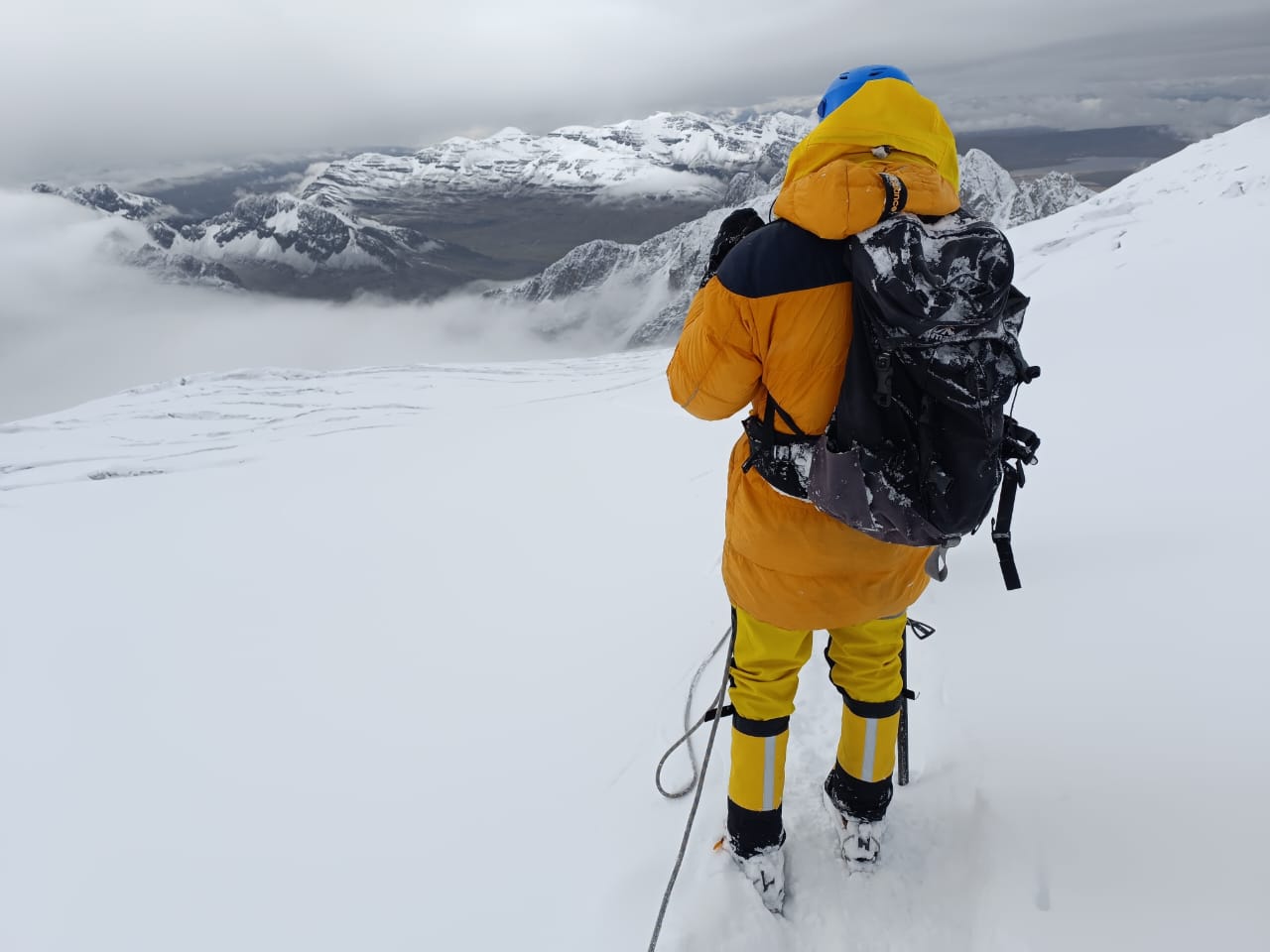
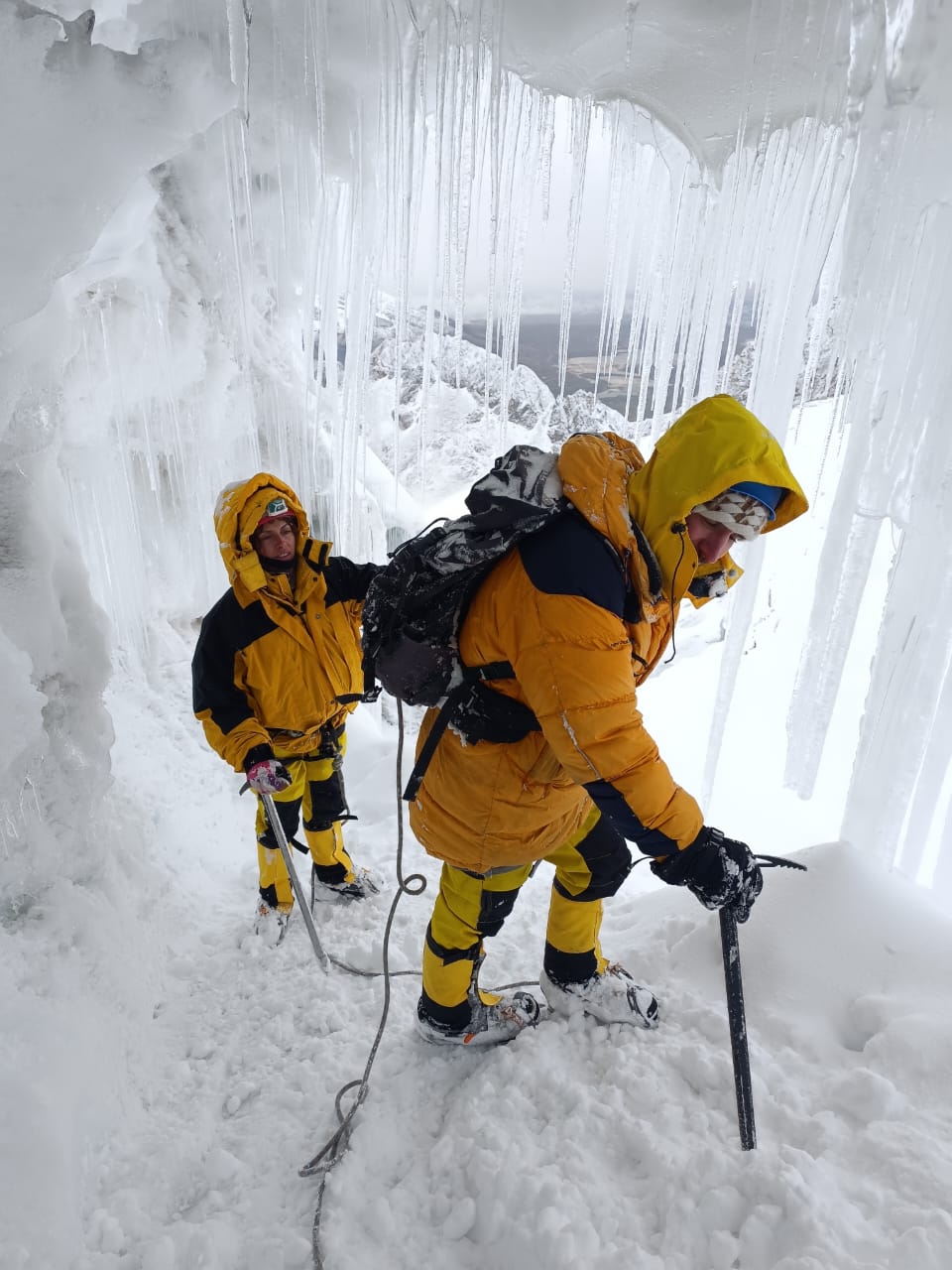
The normal route is not a walk, but it is achievable. It is considered one of the most accessible six miles in the world, but that does not mean it is easy. The ascent from the high camp (5,150 m) to the summit takes between 4 and 6 hours, and the return another 3 hours. On the way, you cross the famous "Pala Chica", a 30-meter ice wall with an inclination of 45 to 50 degrees, and then the "Pala Grande", a glacier that seems endless when oxygen is scarce. The last section, the crest, is a narrow ridge with exposure on both sides; The summit itself is small and often has a pronounced ledge that reduces usable space. It is not technically difficult, but vertigo and height are the real enemies.
The mountain is not eternal, and that makes it more valuable. Global warming has made the Huayna Potosí glaciers retreat at a rate of two to three meters thick per year. Where there was once solid ice, there is now rock. Where the glacier was solid, streams of meltwater now flow. Guides who have been climbing for decades say that the "easy climb" of yesteryear has become more technical and dangerous due to the cracking of the glacier. Climbing Huayna Potosí today is not just an adventure: it is saying goodbye to a mountain that, in a few decades, may no longer have eternal snow. It is walking on a slowly dying giant, while the sun continues to rise every morning as it has since the first mountaineer reached its summit in 1919. ?