MORE INFORMATION
- I pick up La Paz
- Arrival Cholet/Casa de las cholitas/Colosseum October 12
- Return to La Paz
Tour Includes
- ✓Transport
- ✓Guide in Spanish / English
- ✓VIP seats
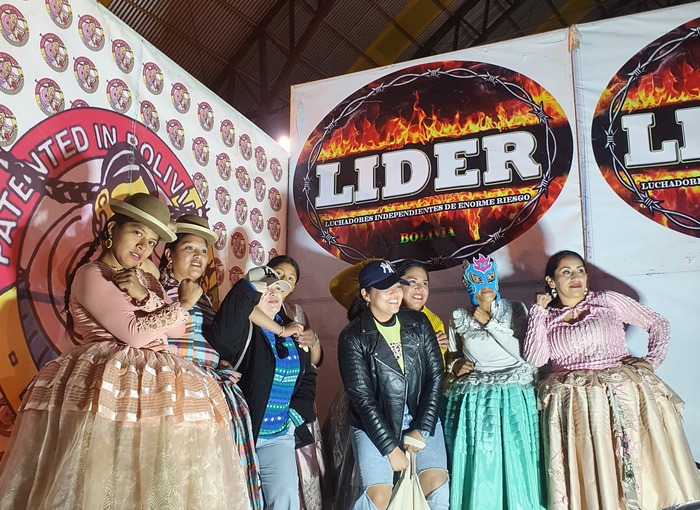
- ✓Photo
- ✓Snack
- ✓Souvenir and ticket
Tour Does Not Include
- ✗Extra drinks
- ✗Beer
(Coming soon)
👑 Private Tour - Exclusive Benefits
Choose the time that suits you best
More comfortable and without sharing with strangers
100% dedicated attention to you
No rush, for the photos you want
Ideal for families, couples or friends
Contact us for a personalized quote
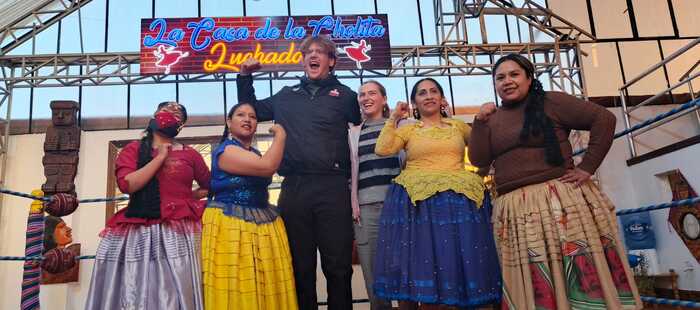
Cholitas Luchadoras de EL ALTO
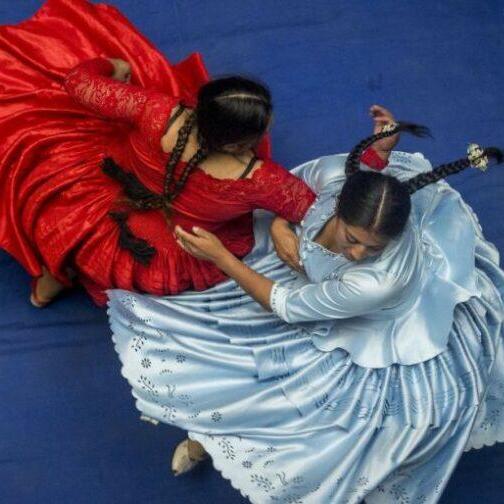
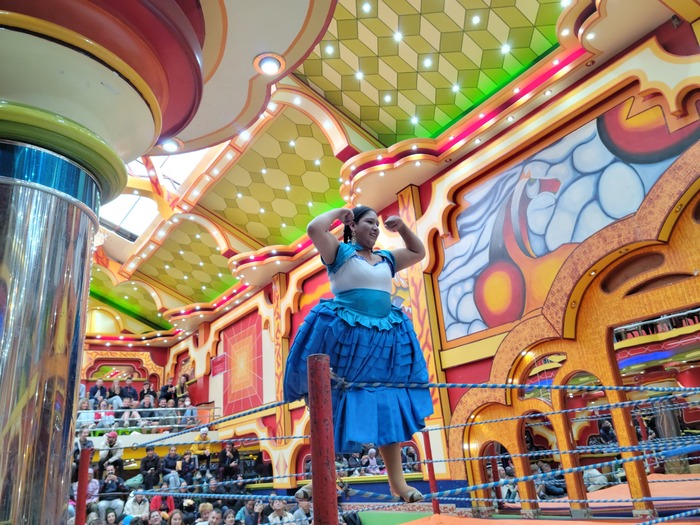
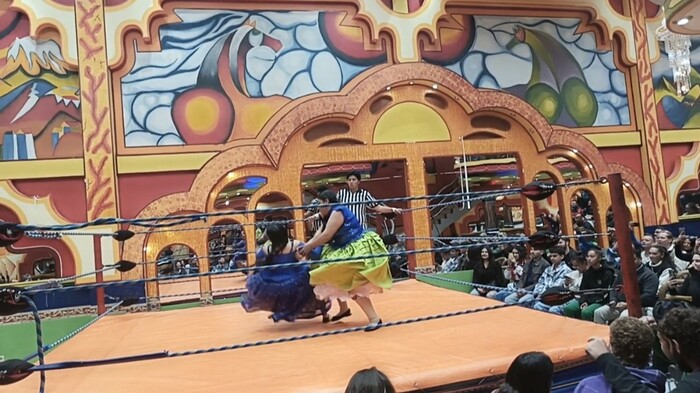
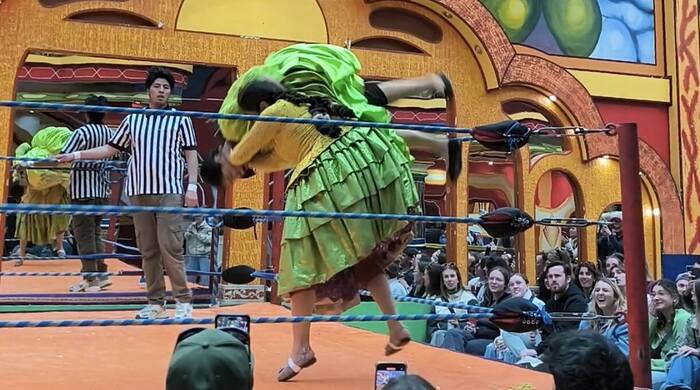
Climb the most unforgiving plateau on the continent. In the heart of El Alto, 4,150 meters above sea level (higher than the top of many European volcanoes), a spectacle unique in the world defies all logic: women in velvet skirts, felt bowler hats and patent leather shoes are launched into the air to crash onto the ground. They are the Cholitas Luchadoras, and no, it is not theater. It is real combat, living tradition and a cry of empowerment that echoes in the Andes.
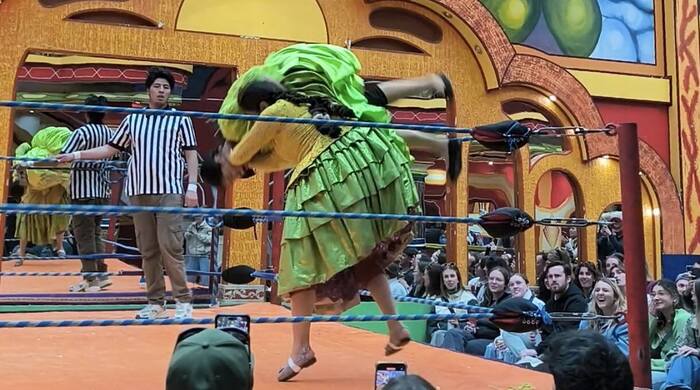
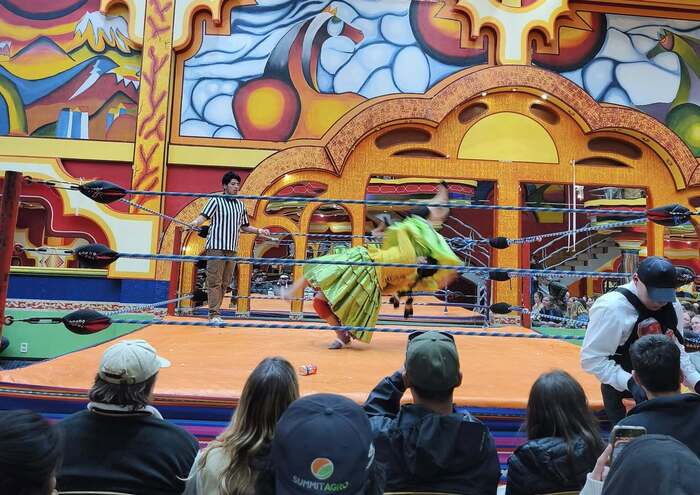
The Guinness record achieved by the Cholitas Luchadoras of Bolivia was achieved on January 17, 2025 in the program "Lo Show Dei Record" in Milan, Italy. A team of four fighters—Blanca Daniela Simonini Chuquimia, Maria Jose Simonini Chuquimia, Sonia Mariela Averanga Fernandez and Laura Tarqui Yohasida Nieves—set the mark for "Most takedowns in 'angel dive' style in one minute (as a team)," achieving a total of 15 takedowns in that time. The "angel dive" is an aerial wrestling maneuver where the wrestler jumps from one of the corners of the ring (the turnbuckle) to land on the opponent who is on the ground. This record adds to the fame of these indigenous Aymara women, who have gained international recognition by combining their traditional culture with the spectacle of wrestling, breaking gender stereotypes and becoming a symbol of empowerment.
The legend inside the ring is more powerful than any script. These women—most of them single mothers, market sellers or domestic workers—put on the wrestling masks just two decades ago to demonstrate that the cholita from La Paz not only raises children and cooks api, but kicks heads. They say that the first time a cholita jumped out of the ring on her opponent, the audience fell silent. No one had ever seen a skirt fly so high. Oral legend says that Pachamama (Mother Earth) herself gave them strength: every time a cholita gets up after a brutal blow, it is the Andean earth pushing her back into the fight.
The weather adds a layer of madness. La Paz and El Alto punish with temperatures that range between -3°C and 15°C, depending on the time of day and the season. The high-altitude sun burns the face (UV radiation level 11+), but the wind that comes down from the snowy Illimani (6,462 meters) cuts the bones. The air has 40% less oxygen than at sea level. That means that while you watch from the stands, waving a flag, the fighters are flying at 4,150 meters with their hearts at 180 beats per minute and their lungs burning. Seeing a 70-kilo cholita in a loincloth—but with her skirt and hat intact—execute an "Andean break" (a blow that combines an arm lock with a flying kick) is like seeing a superhero in the flesh.
The most striking thing is not the violence: it is the choreography of resistance. The cholitas enter the ring with their skirts made of 8 layers of fabric, each weighing 3 to 4 kilos. They wear patent leather shoes with low heels that slide on the canvas. The bowler hat is tied with a ribbon to the chin so that it does not fly away when they receive a flying iron from the third rope. The rules are flexible: chairs, brooms, boleadoras (the stone and rope weapons used by the gauchos) and shouts in Aymara that no translator can decipher are valid. The names of the fighters are street poetry: "Juana la Revolucionaria", "Carmen la Vicenta", "Luna Mestiza", "La Diabólica". Each one has a real story behind it: victims of domestic violence who found in wrestling a way to pay for their children's school.
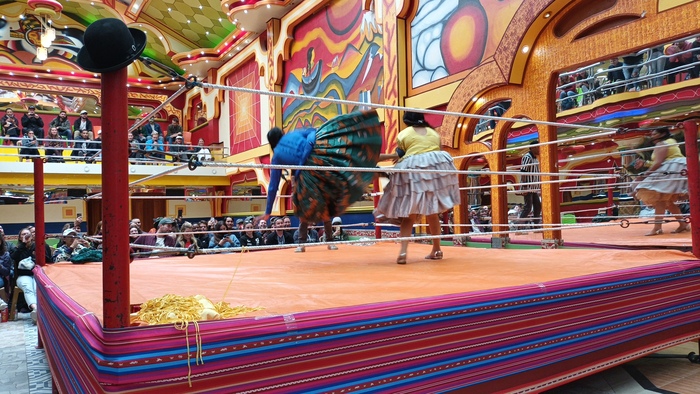
The Multifunctional of El Alto is the temple of this Andean Roman circus. On Tuesdays and Thursdays at 7:00 p.m., when the temperature drops to 5°C and the fog begins to envelop the city, hundreds of tourists and locals squeeze into wooden stands. The air smells of incense, mocochinchi soda and adrenaline. The cholitas jump out of the dressing room (an unheated concrete room) and run towards the ring while the audience shouts: "K'awari! K'awari!" (Strong! Strong! in Aymara). The fights last 5 to 10 minutes, but they seem like hours because each fall sounds like a dull thud on the canvas. The fighters' masks—some shaped like condors, others like ocelots, others with lightning bolts and moons—sweat high-altitude dust.
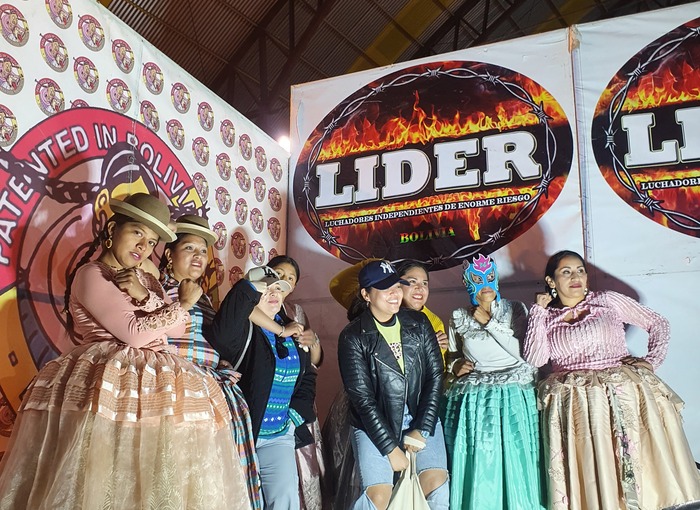
And the most moving thing happens when the fight ends. The cholitas take off their masks, hug their rivals (many are sisters or sisters-in-law in real life), and limp out of the ring. In the locker room, they will bandage their swollen ankles and drink coca tea for altitude sickness. And tomorrow they will go back to selling potatoes in the Rodríguez market or cleaning houses in the southern area. Because the fight, for them, is not a show. It is your life invested in each turn of the bell at 4,150 meters where oxygen is a luxury and respect is earned by beating.